











Note that iPhone devices from Mainland China aren’t eSIM compatible. Also iPhone devices from Hong Kong and Macao aren’t compatible (except for iPhone 13 Mini, iPhone 12 Mini, iPhone SE 2020 and iPhone XS)
April is the month this happens across more cities simultaneously than at any other point in the year. While May brings the gravitational pull of Cannes and draws the industry to the French Riviera, April quietly distributes the best programming across a global calendar that spans South Korea, Hong Kong, Turkey, Argentina, Italy, and the United States. For the traveler who builds itineraries around cultural events rather than tourist circuits — who plans around what is showing as much as where they are going — April is the most rewarding month on the calendar.
This guide covers the major April film festivals worth traveling for, what each one offers the serious cinephile, how to build a multi-festival itinerary across the month, and how to stay connected seamlessly across every destination without managing a different SIM card at every border. Voye Global’s regional plans cover the Asia circuit, the European circuit, and the Latin American circuit — one eSIM, installed before departure, working from the moment the plane lands in each festival city.
Why April Is the Best Month for Film Festival Travel?
The international film festival calendar has a rhythm. January and February are dominated by Sundance and the awards circuit’s final lap before the Oscars. March begins to open up. Then April arrives — and the map lights up.
The programming is genuinely interesting.
April festivals occupy a distinctive position in the annual cycle. The films completing the previous year’s awards circuit have had their moment; the summer blockbusters have not yet arrived. What fills the April programming slots is the most interesting category of cinema: independent and arthouse films that will define conversations at Cannes in May, regional language productions that rarely travel to mainstream markets, documentary work that takes risks the major festivals will not, and world premieres from filmmakers whose next film everyone will be waiting for. The cinephile who travels in April sees films that are not yet known, in the cities where they belong.
The travel conditions are favorable.
April is shoulder season across most of Europe and comfortable weather across Asia and Latin America. Accommodation in festival cities is easier to book and more reasonably priced than at peak summer events. Flights into secondary cities — Jeonju in South Korea, Bari in southern Italy — are not inflated by festival demand in the way that Cannes prices every hotel room on the Riviera at a premium. The traveler who moves fast and plans a few months ahead finds April to be the most cost-effective month in the festival calendar.
The festivals themselves are accessible.
Several of the major April events have cultivated reputations as filmmaker-friendly, audience-accessible festivals where the distance between the screen and the person who made the film is smaller than at the industry-heavy events. Attending Jeonju or BAFICI in Buenos Aires feels different from attending a major European A-list festival — the scale is human, the conversations are genuine, and the screenings carry the specific energy of a room full of people who have traveled specifically to be in that room.
The April Film Festival Map
South Korea — Jeonju International Film Festival
When: Late April to early May
Where: Jeonju, North Jeolla Province, South Korea
Two hours south of Seoul by train, Jeonju is a city better known domestically for its hanok village and bibimbap than for cinema. For ten days every late April, it becomes one of the most important film events in Asia. The Jeonju International Film Festival has built a reputation over more than two decades as the event where Asian independent cinema gets its most serious platform — where filmmakers working outside the commercial mainstream find their most engaged audience.
The programming philosophy at Jeonju is explicit about what it values: work that takes risks, filmmakers who refuse easy narratives, cinema that is difficult in the ways that make it worth watching. The festival’s own production arm — Jeonju Cinema Project — commissions short films from international directors each year, creating work that exists specifically for this festival and premieres here. For cinephiles who want to see not just the films that will travel to other festivals but the films that were made for this one, Jeonju offers something that no other April event replicates.
The city around the festival is as rewarding as the programming. Jeonju’s hanok village — several hundred traditional Korean houses preserved in the center of the city — is a remarkable place to spend an afternoon between screenings. The food culture of the North Jeolla region is considered by many Koreans to be the finest in the country. April is cherry blossom season across much of Korea, and Jeonju’s quieter pace compared to Seoul makes the combination of cinema and city particularly good.
English-language resources at the festival are available and improving, but Jeonju is a genuinely Korean city and the surrounding region is predominantly Korean-speaking. Travelers navigating independently — finding venues, reading menus, asking directions in smaller streets — benefit meaningfully from translation apps running on a live data connection.
Getting connected: Voye Global’s Asia plan covers South Korea across 18 countries. An unrestricted hotspot keeps a laptop or tablet connected throughout screening days. Use code VOYE15 for 15% off.
Hong Kong — Hong Kong International Film Festival
When: Late March through mid-April
Where: Hong Kong, multiple venues across the city
The Hong Kong International Film Festival is the oldest film festival in Asia, running since 1977. That history is visible in the programming depth — decades of relationships with Chinese-language filmmakers, a critical tradition that has shaped how Hong Kong and Mainland Chinese cinema are understood internationally, and an institutional confidence that allows the festival to take positions on what matters in Asian cinema.
The programming covers two parallel tracks that rarely intersect this productively anywhere else in the world. The Chinese-language programming — Hong Kong, Mainland China, Taiwan, and the diaspora — is the most comprehensive annual survey of that cinematic tradition available to international audiences. Alongside it, the international selection covers European, American, and global art-house cinema with the same seriousness. Attending Hong Kong in April means moving between these two worlds in the same day — a morning screening of a Taiwanese documentary, an afternoon with a Portuguese filmmaker’s new work, an evening Hong Kong retrospective.
Hong Kong as a city adds a specific texture to the festival experience. The density of the urban environment means venues across the city are navigable by MTR and on foot. The waterfront, the markets of Mong Kok, the quiet of Lamma Island accessible by ferry — all of this surrounds the festival and can be incorporated into the days around screenings. April weather in Hong Kong is warm and occasionally humid but generally good for the kind of outdoor walking that moves a festival-goer between venues and neighborhoods.
Getting connected: Voye Global’s Asia plan covers Hong Kong. One eSIM covers both Hong Kong and South Korea for travelers doing the Asia circuit across April.
Your Journey, Our eSIM
Stay online abroad with instant activation.
India — Independent and Regional Festival Circuit
When: Throughout April, multiple cities
Where: Mumbai, Chennai, Bangalore, and other cities depending on the specific event
India’s film culture is not one thing and its festival calendar in April reflects that. While the Mumbai International Film Festival is the country’s most prominent event (typically held in January), April sees a constellation of smaller, regionally specific festivals that in aggregate represent the depth of Indian cinema in ways the major festivals cannot.
Tamil cinema, Telugu cinema, Malayalam cinema, Kannada cinema — each regional tradition has its own critical culture and its own festival infrastructure. April programming in Chennai, Bangalore, or Hyderabad often surfaces work that never reaches mainstream distribution, made in languages and with sensibilities that the Bollywood-focused narrative consistently misses. For travelers with a specific interest in Indian cinema beyond the mainstream, following the April regional circuit into secondary cities offers a genuinely different encounter with the country’s cinematic culture.
The practical reality of festival travel in India is that moving between cities requires more planning than in more compact countries. Confirming specific festival dates annually is essential — schedules shift. The connectivity landscape varies significantly between cities: reliable 4G in major urban centers, more variable coverage as itineraries extend into smaller destinations.
Getting connected: Voye Global’s Asia plan covers India. Multilingual WhatsApp support is particularly relevant for travelers navigating independently across multiple Indian cities.
Turkey — Istanbul Film Festival
When: April, approximately two weeks
Where: Istanbul, multiple cinema venues across the city
The Istanbul Film Festival has been running since 1982, making it one of the region’s most established events. It programs Turkish cinema with a seriousness and breadth that the domestic film industry deserves — work from established directors alongside emerging filmmakers, retrospectives that reframe careers, and a competition section that functions as a genuine critical assessment of where Turkish cinema is at this moment.
Alongside the Turkish programming, the international selection is substantial. The festival has cultivated a specific identity around European and Middle Eastern cinema that reflects Istanbul’s geographic and cultural position — a city that genuinely sits between Europe and Asia, between the Mediterranean and the Black Sea, and programs cinema that reflects that breadth of orientation.
Attending a film festival in Istanbul involves a specific geography that no other festival city replicates. The venues are spread across both the European and Asian sides of the Bosphorus. Moving between screenings might mean a short metro ride or a ferry crossing. The city between screenings — the Grand Bazaar, the old city, the neighborhoods of Beyoğlu and Karaköy — makes the hours outside the cinema as rich as the hours inside it. April is a particularly good month in Istanbul: warm but not yet the peak summer heat, with long evenings that extend the useful hours after screenings.
Italy — Bari International Film Festival
When: April
Where: Bari, Puglia, southern Italy
Southern Italy in April is one of travel’s quieter pleasures — the almond and olive groves in flower, the Adriatic still uncrowded, the pace of the old city unhurried by summer tourism. Bari is the capital of Puglia and a city with a strong sense of its own identity, and the Bari International Film Festival uses the city’s character as the framework for its programming: Mediterranean cinema, Italian independent work, and a broader European selection that reflects the festival’s positioning as the cultural anchor of the region’s spring season.
BIFF has developed a reputation as a festival that takes its audience seriously — not an industry showcase but a cinephile event, with programming chosen for the audience in the theater rather than the buyers in the market. The venues are concentrated in the city center and are walkable. The rhythm of screening, lunch, screening, aperitivo, and evening film that the festival encourages is the rhythm of the city itself.
The surrounding region rewards extension. The trulli of Alberobello, the baroque architecture of Lecce, the coastline of the Salento peninsula — all of this is within day-trip distance of Bari. For travelers building an April Italy itinerary around the festival, the combination of film and landscape in Puglia in April is particularly good.
Getting connected: Voye Global’s Europe plan covers Italy across its 49-country European footprint. Use code VOYE15 for 15% off.
Israel — DocAviv, Tel Aviv International Documentary Film Festival
When: April to May, Tel Aviv
Where: Tel Aviv, multiple venues
DocAviv is one of the world’s leading documentary film festivals and has built a reputation for programming that takes the form seriously as art rather than treating it purely as reportage. Israeli documentary filmmaking is among the strongest in the world — a fact that the international festival circuit acknowledges in the number of Israeli documentaries that appear at major events each year — and DocAviv functions as the event where that tradition is most fully represented and celebrated.
The international selection is equally strong. DocAviv programs documentary work from across the world with a particular interest in films that ask difficult questions and do not offer easy answers. The festival atmosphere in Tel Aviv reflects the city’s cultural energy — compact, walkable, with a café and cultural infrastructure that makes the hours between screenings as alive as the screenings themselves. April in Tel Aviv is warm, sunny, and well before the peak summer heat that makes July and August demanding.
Travelers should confirm current travel advisories before booking. Tel Aviv is a major international hub with strong English-language infrastructure across the city.
Getting connected: Voye Global’s Europe plan covers Israel. One plan covers Tel Aviv and any connecting European city on the same itinerary.
Argentina — Buenos Aires Independent Film Festival (BAFICI)
When: April, approximately two weeks
Where: Buenos Aires, multiple venues across the city
BAFICI is the most important event in Latin American independent cinema and has been since its founding in 1999. It holds that position not because it is the largest or the most internationally prominent, but because its programming philosophy is the clearest of any festival in the region: the work that does not fit anywhere else, the filmmakers who are doing something that the mainstream circuit cannot accommodate, the films that will define conversations about Latin American cinema in the years ahead.
Buenos Aires as a festival city is exceptional in a specific way. The cinema culture here is embedded into daily life — the city has more cinemas per capita than almost anywhere in the world, and the culture of discussing film seriously is not limited to a critical elite but is diffused through neighborhoods, cafés, and universities. BAFICI is not an event parachuted into a city that happens to have cinemas; it is an intensification of something that already exists, drawing an audience that has been thinking seriously about film all year and is ready to concentrate that attention for two weeks.
The programming spans Argentine cinema, Latin American cinema, and a genuinely global international selection. Spanish is the primary language of the festival and the city, though international selections screen in their original languages. Travelers without Spanish will find Buenos Aires navigable with apps and basic phrases, though the experience of the city — and the festival — deepens considerably with some language.
Getting connected: Voye Global’s Latin America plan covers Argentina across 27 countries, including 14 Caribbean island nations for travelers combining Buenos Aires with broader Latin American travel. Use code VOYE15 for 15% off.
United States — Tribeca Film Festival and Regional Events
When: Late April into May (Tribeca), April (San Francisco, Philadelphia, and others)
Where: New York City, San Francisco, Philadelphia, and other cities
The American April festival landscape is geographically distributed in a way that rewards travelers who are already moving through the country. Tribeca, founded in New York in 2002 in the aftermath of September 11, has grown into one of the most significant film events in the United States — programming American independent cinema alongside international work, with a specific interest in documentary and genre filmmaking that the more conservative major festivals sometimes undervalue.
The San Francisco International Film Festival, one of the oldest in the western hemisphere, has been running since 1957 and maintains a programming identity rooted in international art-house cinema with a particular openness to Asian and Latin American work. For international travelers on a broader US itinerary, San Francisco in late April is both a festival stop and one of the most rewarding cities in the country to spend time in.
Philadelphia’s festival has built a reputation for strong independent American cinema programming and operates at a scale that makes it accessible and unhurried compared to the larger New York events. For travelers based on the East Coast, the combination of a Tribeca visit and a Philadelphia event across the month is achievable without significant travel.
Getting connected: Voye Global’s North America plan covers the United States, Canada, and Mexico under one eSIM — unlimited plans available at 3GB per day.
Check out our plans
-

United States 10 Days Unlimited Data
USD 17.00 -
United States 15 days 10GB
USD 15.00
United Kingdom — Aesthetica Short Film Festival and BFI Events
When: April programming varies annually — confirm before booking
Where: York (Aesthetica), London (BFI)
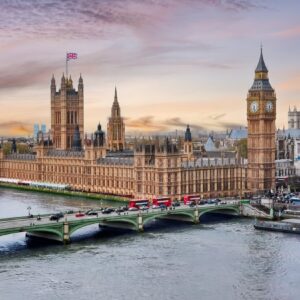
The United Kingdom’s April festival landscape is anchored by two events with very different characters. Aesthetica in York is one of Europe’s most respected short film festivals — a form that the major international events consistently underprogram relative to its importance in discovering the filmmakers who will define the next decade of cinema. York as a festival city is a specific pleasure: one of England’s most beautiful medieval cities, compact and walkable, with a character very different from the London events.
The BFI in London runs programming events throughout the year, and April often carries programming that builds on or extends its main festival in the autumn. London’s status as one of the world’s great cinema cities means that attending BFI programming in April — even outside a major festival window — means access to screenings, talks, and retrospective programming that no other city in the English-speaking world matches.
Getting connected: Voye Global’s Europe plan covers the United Kingdom within its 49-country footprint. One plan covers the UK and any connecting European destination.
Check out our plans
-
United Kingdom 10 Days Unlimited Data
USD 17.00 -
United Kingdom 15 Days 8GB
USD 13.00
Building an April Film Festival Itinerary
The April calendar offers enough events to fill an entire month of serious festival travel. The question for most travelers is not which festival to attend but how to combine them into a coherent trip.
The Asia Circuit
The natural Asia pairing is Hong Kong and Jeonju. The Hong Kong International Film Festival runs from late March into mid-April; Jeonju begins in late April. A traveler arriving in Hong Kong in early April for the final week of HKIFF, then traveling to Seoul and south to Jeonju for the opening week of the Jeonju festival, covers approximately ten days of festival programming across two cities that are three hours apart by air.

Hong Kong to Seoul is a well-served route with multiple daily flights. The domestic train from Seoul to Jeonju takes approximately two hours and is straightforward. For a traveler with two weeks in late April, this circuit is both culturally rich and practically manageable.
Voye’s Asia plan covers both Hong Kong and South Korea — and India, Japan, and 15 other countries — under one eSIM. One installation before departure, no reconfiguration between cities.
The European Circuit
The European April circuit offers more flexibility because the events are spread across the full month rather than concentrated at either end. Istanbul in early to mid-April, followed by Bari in southern Italy in the second half of the month, covers two festivals with distinct regional cinema programming — Turkish and Mediterranean — in two cities that represent two different faces of the Mediterranean.

Istanbul to Bari requires a connection through Rome or another Italian hub — approximately four to five hours of travel. A two-week European April itinerary built around these two festivals, with a few days in Rome or Naples in transit, is one of the more rewarding combinations available in the spring travel calendar.
DocAviv in Tel Aviv is reachable from Istanbul directly — approximately two and a half hours — and fits naturally into a broader Middle Eastern and Mediterranean circuit for travelers with more time.
Voye’s Europe plan covers Turkey, Italy, Israel, and the UK across its 49-country European footprint. One eSIM covers the full circuit.
The Latin America and the US Circuit
BAFICI in Buenos Aires runs in mid-April, and Tribeca in New York begins at the end of April and runs into early May. Buenos Aires to New York is approximately eleven hours by air — not a casual hop, but for travelers already in the Americas, combining the leading Latin American independent film festival with New York’s most prominent spring event across a single April is a serious cinephile trip.
Buenos Aires to New York with a weekend stop in a Caribbean island — covered by Voye’s Latin America plan — adds a natural break in the middle of a long-haul itinerary.
Practical Guide for the Festival Traveler
Tickets and Accreditation
Most international film festivals offer several tiers of access. Single screening tickets are available for most public events and can often be purchased on the day, though popular screenings at major festivals sell out well in advance. Day passes and multi-screening passes represent better value for travelers attending several screenings. Full festival passes are cost-effective for travelers staying the duration but require significant advance planning.

Industry and press accreditation is separate from public ticketing and has earlier deadlines — often three to six months in advance. For travelers with a professional reason to attend, accreditation opens screenings and events not available to the public. For the serious cinephile without industry credentials, the public programme at the festivals covered here is substantial and rewarding without accreditation.
Research the specific festival’s ticket structure before booking travel. Some festivals make the majority of screenings available to the public without pre-booking; others have a reservation culture where the most desired screenings fill quickly.
What to Pack?
- Screening days at international festivals are long. A portable battery pack for a phone and any other device is essential — a day moving between venues in Jeonju or Istanbul involves constant navigation, photography, and the kind of ambient connectivity that depletes a battery faster than expected.
- Comfortable walking shoes matter more than most first-time festival travelers anticipate.
- Bring a lightweight bag that can carry a notebook, water, and a layer for the temperature difference between the outdoor afternoon and the air-conditioned cinema.
- A reliable data connection from the moment of arrival in the festival city is not optional — it is the infrastructure that makes the day work.
- Maps between venues, transport apps, festival schedule apps, accommodation, restaurant bookings, and staying in contact with traveling companions all depend on it.
- Installing the eSIM and testing it before departure removes the variable of airport SIM card hunting at the start of a festival trip.
Navigating the City Between Screenings
The hours between screenings are as much a part of the festival experience as the screenings themselves. Most serious festival cities have developed a culture around the rhythm of film, food, and conversation that makes the between-time as valuable as the cinema time. In Buenos Aires this means the cafés and bars of Palermo and San Telmo. In Jeonju it means the hanok village and the street food of the market. In Istanbul it means the Bosphorus ferry and the neighborhoods of Beyoğlu. In Bari it means the old city and the Adriatic seafront.
None of this is navigable without a working map and, in cities where English-language signage is limited, a translation app. A live data connection is the practical infrastructure that makes the between-screening hours exploratory rather than anxious.
Staying Connected Across the Festival Circuit — Voye Global
The film festival traveler has a specific set of connectivity needs that differs from the standard tourist. They are moving between countries, sometimes multiple countries in a single trip. They are navigating unfamiliar cities using apps that require a live data connection from the moment of arrival. They may need to tether a laptop between screenings for notes, reviews, or work. And they move quickly — a few days in one city, then the next flight, with no time to locate a local SIM card at each new destination.
Voye Global is built for exactly this kind of travel.
The Asia plan covers Hong Kong, South Korea, India, Japan, and 14 other countries under one eSIM — the full Asia circuit without reinstalling between cities. The Europe plan covers 49 countries including Turkey, Italy, Israel, and the UK — the European festival circuit, a Caucasus extension, a Mediterranean detour, all on one plan. The Latin America plan covers Argentina and 26 other countries including 14 Caribbean island nations — the BAFICI trip and a broader southern itinerary on the same profile. The North America plan covers the US, Canada, and Mexico for Tribeca and the American festival circuit.
Hotspot is unrestricted on every Voye plan — a laptop or tablet can be tethered throughout a festival day without a daily ceiling. 24/7 multilingual WhatsApp support means a connectivity issue in Jeonju or Buenos Aires is resolved by a real person in the traveler’s own language at any hour. The eSIM is delivered by QR code to email instantly after purchase, installed in under five minutes before departure, and activates automatically on arrival in each covered country.
Use code VOYE15 at checkout for 15% off your first order.

Film Festival Packing List
- Festival pass and printed or saved digital tickets
- Portable battery pack — essential for long screening days
- Noise-cancelling headphones for transit between festival cities
- Lightweight notebook or note-taking app for screening logs
- Comfortable walking shoes — festival venues spread across cities
- A layer for the temperature difference between the afternoon and the air-conditioned cinema
- Voye Global eSIM — installed before departure, active on arrival in every festival city, unrestricted hotspot throughout
The Films Are Waiting
April’s film festival circuit does not announce itself the way May’s does. There are no yachts in the harbor, no red carpet photographs filling the international press. What there is instead is something more interesting: a month of serious cinema spread across cities that take their cultural role seriously, programmed by people who believe that film matters and attended by travelers who agree.
From the hanok streets of Jeonju to the waterfront cafés of Buenos Aires, from the Bosphorus ferries of Istanbul to the cobbled squares of Bari, April offers the movie-loving traveler a month-long argument for the idea that the best film experience is the one that is inseparable from the city it happens in.
The logistics are simpler than they look. One eSIM covers the Asia circuit. One eSIM covers the European circuit. One eSIM covers Latin America. Install it before the first flight, and the connectivity takes care of itself from there.
Frequently Asked Questions
Q: Which film festivals happen in April 2026?
Major April film festivals include the Jeonju International Film Festival in South Korea (late April), the Hong Kong International Film Festival (late March through mid-April), the Istanbul Film Festival in Turkey (April), the Bari International Film Festival in Italy (April), BAFICI in Buenos Aires (April), DocAviv in Tel Aviv (April to May), and Tribeca in New York (late April). Exact dates vary annually and should be confirmed on each festival’s official website before booking.
Q: Is April a good time to travel to South Korea for a film festival?
April is one of the best months to visit South Korea. Cherry blossom season overlaps with the Jeonju International Film Festival dates in late April. Shoulder-season pricing applies to flights and accommodation. The weather is warm and clear, and the pace of Jeonju is a rewarding contrast to Seoul’s intensity.
Q: How do I get tickets to international film festivals?
Most festivals sell public tickets through their official websites. Popular screenings at established festivals sell out weeks in advance — research the specific festival’s ticketing structure before booking travel. Day passes and multi-screening passes offer better value than individual screening tickets for travelers attending multiple films. Industry and press accreditation is a separate process with earlier deadlines.
Q: Do I need to speak the local language to enjoy an international film festival?
Most international film selections are screened with subtitles. English-language materials and signage vary by festival — Hong Kong and Istanbul have strong English infrastructure; Jeonju and Bari are less English-oriented outside the festival venues themselves. A working translation app and navigation app running on a live data connection make independent travel in any of these cities significantly more manageable.
Q: What is the best eSIM for film festival travel across multiple countries?
Voye Global’s regional plans cover the major April festival destinations without requiring reinstallation between cities. The Asia plan covers Hong Kong, South Korea, and India on one eSIM. The Europe plan covers Turkey, Italy, Israel, and the UK across 49 countries. The Latin America plan covers Argentina and 26 other countries including 14 Caribbean island nations. Unrestricted hotspot, 24/7 multilingual WhatsApp support, and transparent prepaid pricing make Voye well-suited for fast-moving multi-city festival travel. Use code VOYE15 for 15% off the first order.
Q: How do I stay connected while moving between multiple festival cities?
Install a Voye Global regional eSIM before departure — it activates automatically on arrival in each covered country without reinstalling. No SIM card hunting at airports, no border reconfiguration. Top-ups are available without reinstalling the profile. The 100MB free trial confirms the eSIM works on the device before the first flight.
Q: What should I pack for a film festival trip?
A portable battery pack is essential — screening days deplete phone batteries faster than expected. Comfortable walking shoes for moving between venues. A lightweight notebook or note-taking app for screening logs. A travel data plan that activates on arrival in every festival city.
Seamless Mobile Data Everywhere
Voye Global — Your Trusted eSIM Partner for Secure & Reliable Travel.




 English